Men’s Kurta — The Ultimate Buying Guide
Buying a kurta should feel simple. Yet most men stand in front of a rack — or a screen — unsure what separates a good kurta from a great one. Is it the fabric? The fit? The stitching on the collar? At Sheriff, we've spent over four decades answering exactly this question for men across India. This guide covers everything — from history and types to fabric, fit, and styling — so you can buy your next kurta with total confidence.
1. What is a Kurta ?
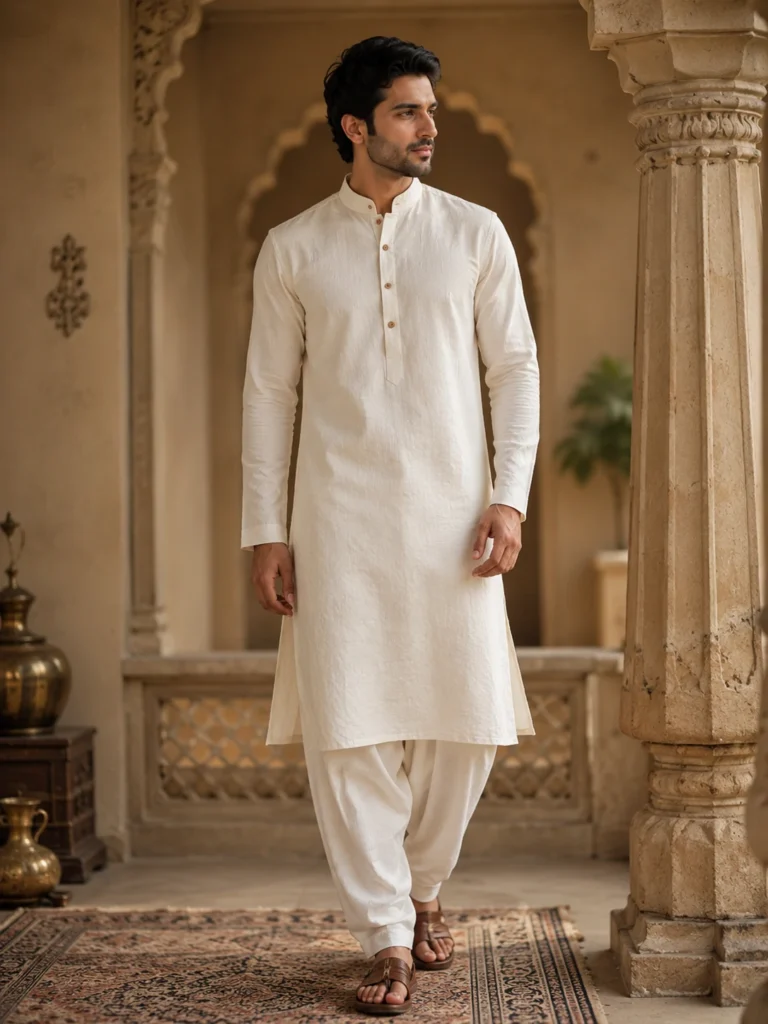
A kurta is a loose-fitting, collarless or mandarin-collar upper garment, traditionally falling from hip to knee length. Unlike a shirt, it has no full front button placket and no fitted waist — allowing complete ease of movement.
- No fitted waist — designed for ease of movement
- Can be worn alone, with churidar, or layered under a jacket
- One of the most versatile garments in Indian menswear
2. A Brief History of the Kurta
The kurta’s lineage stretches back over a thousand years, Tracing its roots to Central Asian nomadic tunics, or upper body garments, of the late-ancient- or early-medieval era, the kurta has evolved stylistically over the centuries, especially in South Asia, as a garment for everyday wear as well as for formal occasions.. By the Rajputana era, it had been refined into a court garment — fine muslin and silk for royalty, cotton for everyday wear.
- Refined as a royal court garment under Rajputana patronage.
- Became a symbol of national identity post-independence
- Silhouette largely unchanged in a hundred years
3. Types of Kurtas
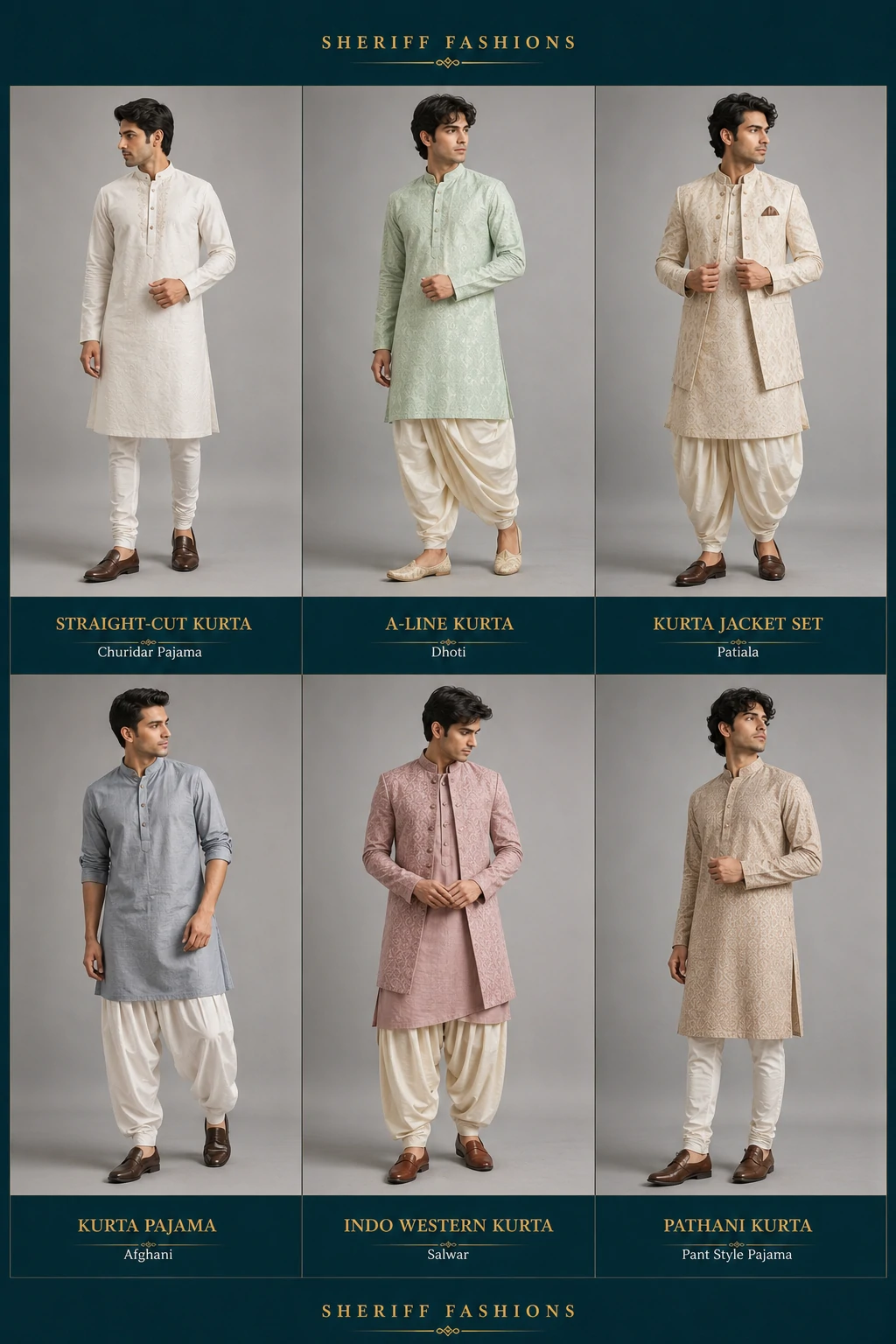
Not all kurtas serve the same purpose. Understanding the category helps you buy with intent rather than impulse.
- Straight-cut Kurta – classic, most versatile silhouette
- A-line Kurta – flares gently from the waist
- Kurta Jacket Set – layered with a bandhgala, wedding-ready
- Kurta Pajama – traditional two-piece
- Indo Western Kurta – asymmetric, contemporary draping
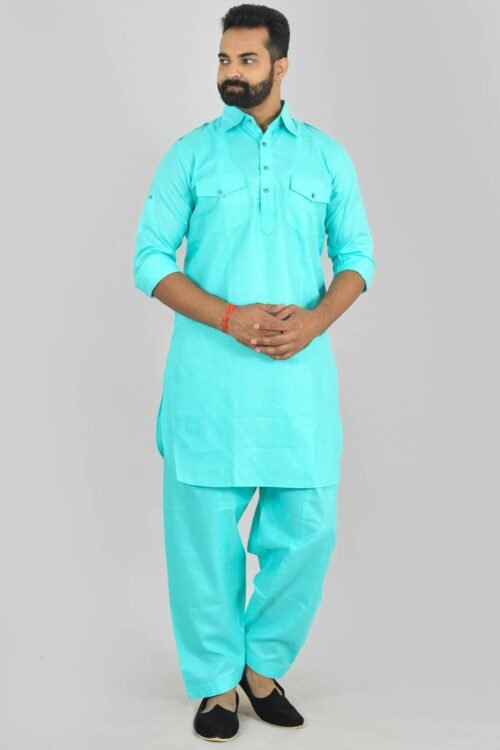
- Pathani Kurta – looser cut, distinctive front placket
4. Choosing the Right Kurta
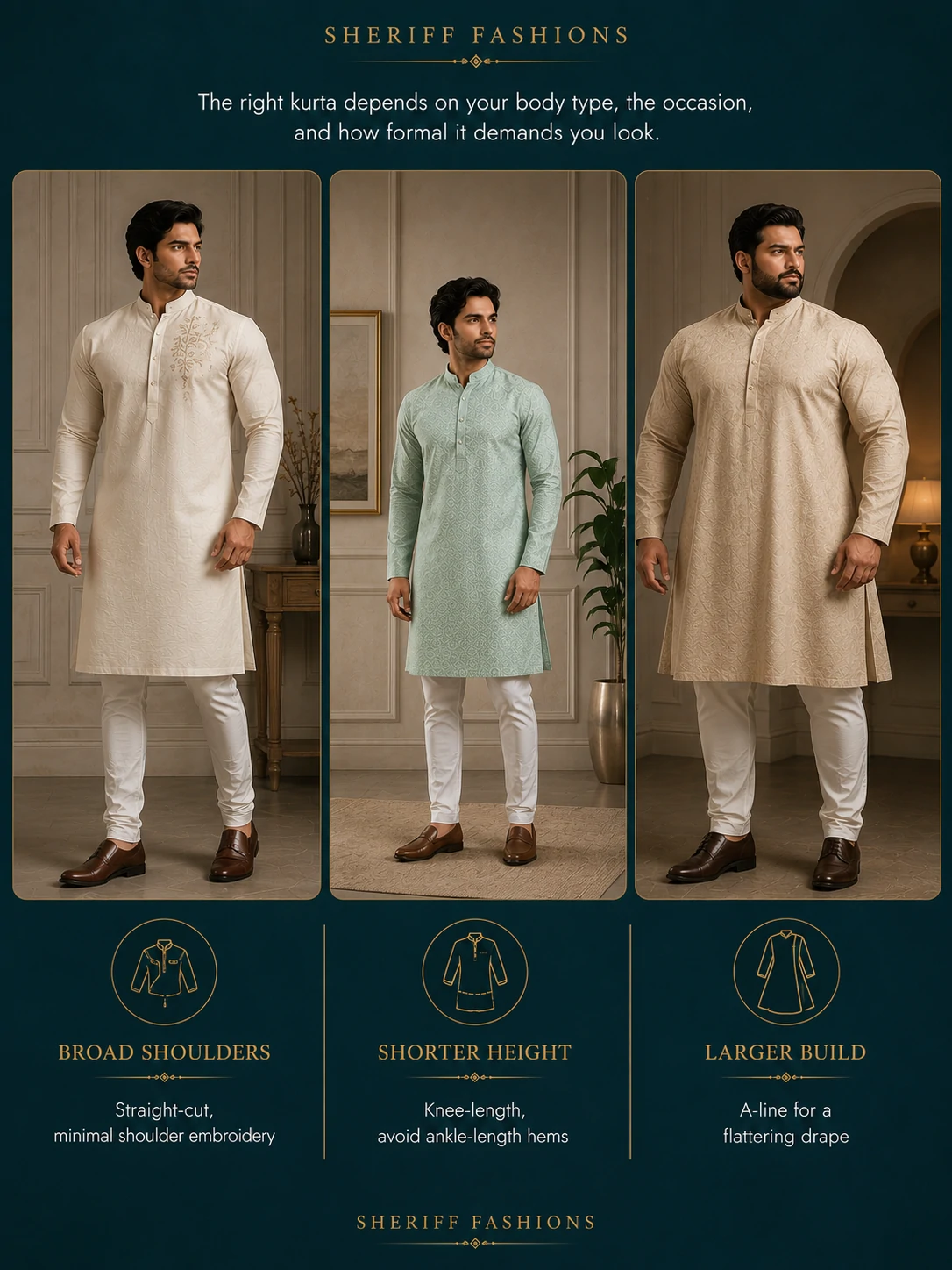
The “right” kurta depends on your body type, the occasion, and how formal it demands you look. Buy what answers these three questions correctly, not just what looks good on a hanger.
- Broad shoulders – straight-cut, minimal shoulder embroidery
- Shorter height – knee-length, avoid ankle-length hems
- Larger build – A-line for a flattering drape
5. Fabrics That Define the Look
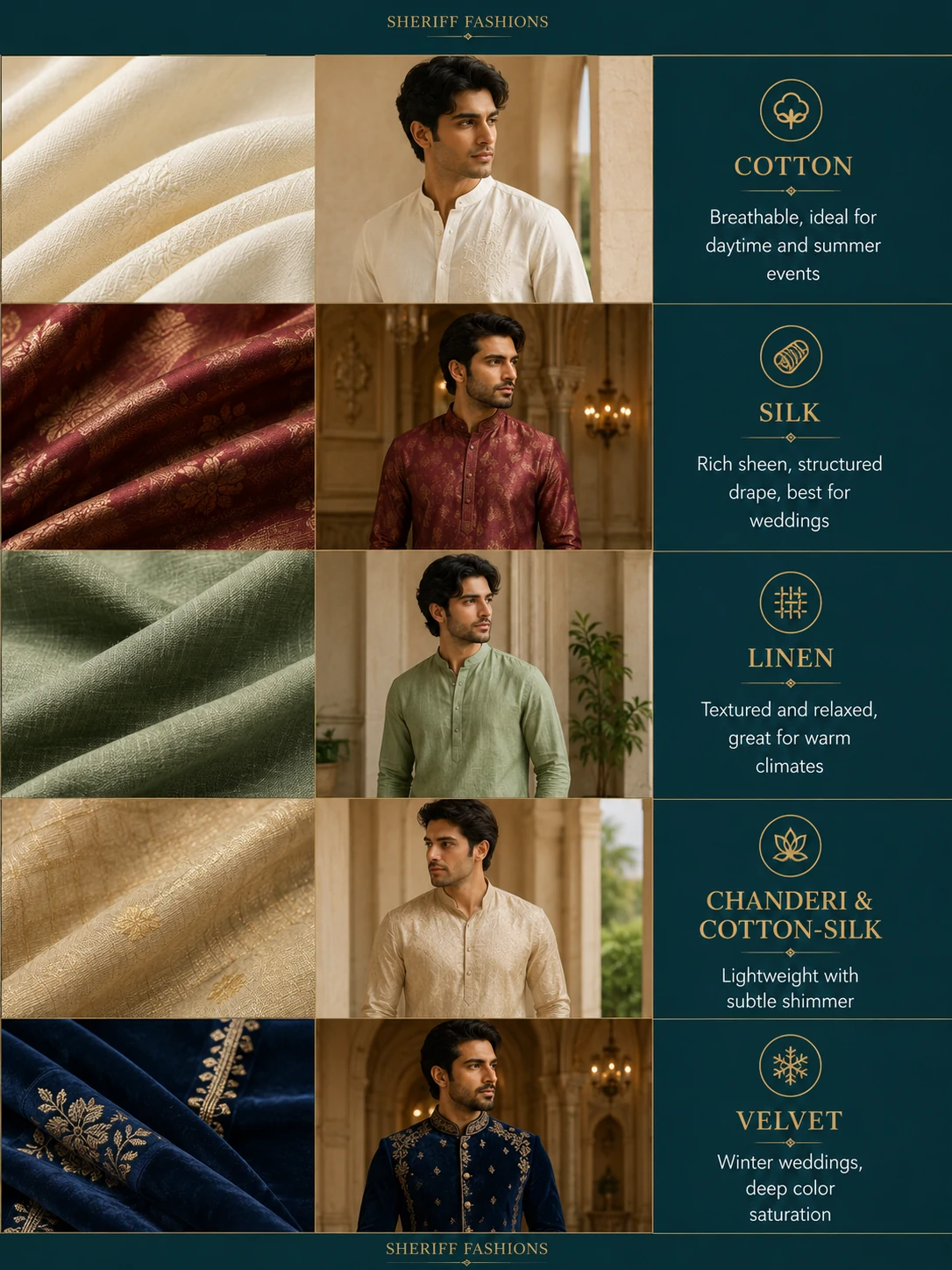
Fabric determines comfort, drape, and occasion-fit more than any other factor.
- Cotton – breathable, ideal for daytime and summer events
- Silk – rich sheen, structured drape, best for weddings
- Linen – textured and relaxed, great for warm climates
- Chanderi & Cotton-Silk – lightweight with subtle shimmer
- Velvet – winter weddings, deep color saturation
6. Colors That Make a Statement
Color communicates as much as cut does — choose it with the occasion in mind.
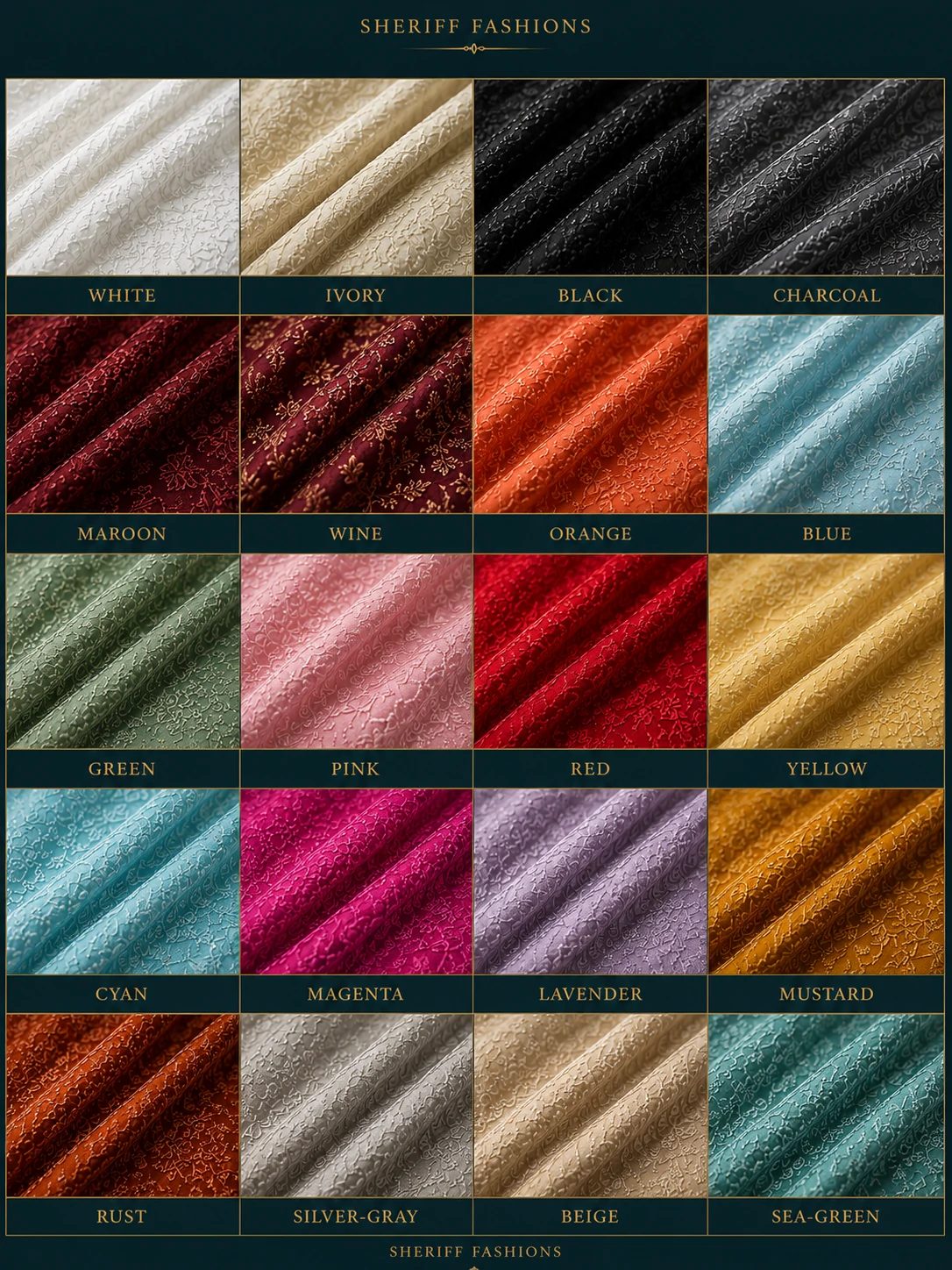
- White & Ivory – timeless, safest choice for weddings
- Black & Charcoal – modern, sharp for evening events
- Maroon & Wine – festive richness, Diwali and sangeet
- Pastels – daytime weddings and mehendi functions
- Mustard & Rust – Holi, Baisakhi, seasonal festivals
7. The Perfect Fit Guide
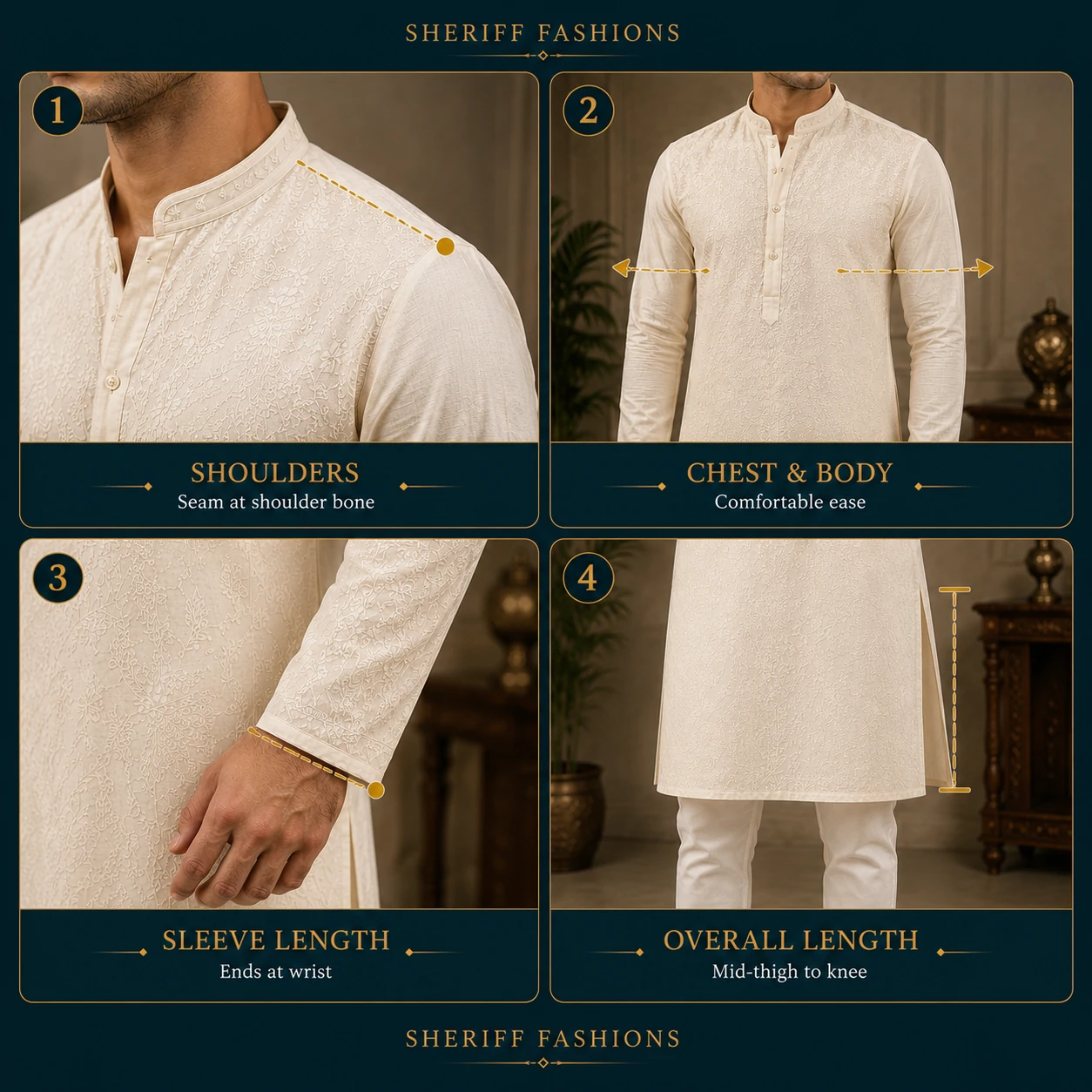
A kurta’s fit is judged at four points — get these right and everything else falls into place.
- Shoulders – seam sits exactly at the shoulder bone
- Chest & Body – room to move, no excess billowing
- Sleeve length – ends at the wrist bone
- Overall length – mid-thigh to knee, traditionally
8. Kurta According to Occasion
| Occasion | Fabric | Color | Styling Note |
|---|---|---|---|
| Wedding (Groom/Guest) | Silk, Silk-blend | Ivory, Gold, Maroon | Pair with jacket + mojari |
| Engagement | Silk-cotton, Chanderi | Pastels, Blush | Lighter embroidery |
| Reception | Velvet, Silk | Black, Wine | Structured jacket set |
| Festival (Diwali/Eid) | Cotton-silk | Maroon, Mustard | Statement mala or brooch |
| Office Festive Day | Cotton | White, Pastel | Minimal embroidery |
| Casual Family Function | Cotton, Linen | Any earth tone | Kurta with jeans works |
9. Essential Kurta Accessories
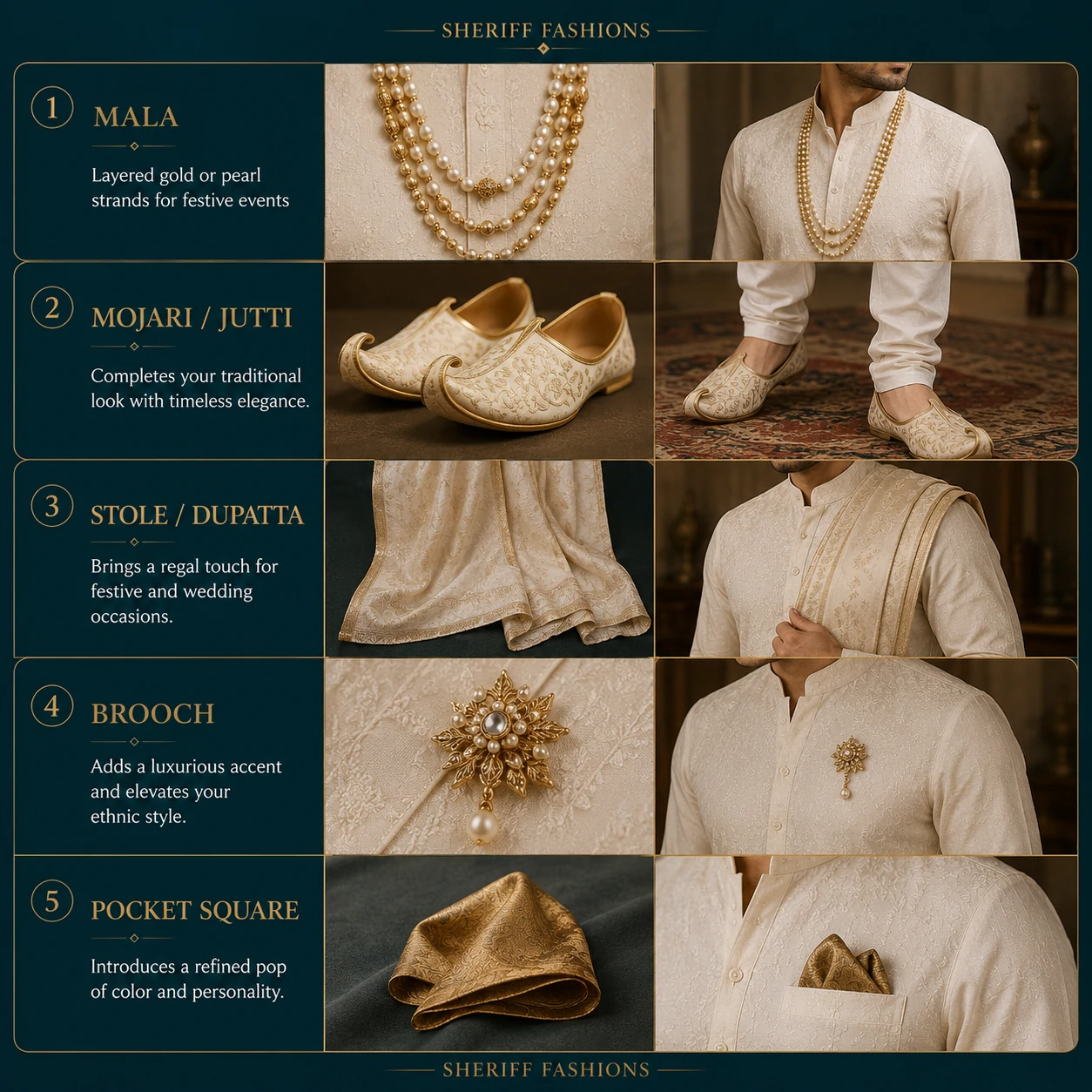
The right accessories elevate a kurta from good to memorable — one statement piece is more elegant than several at once.
- Mala – layered gold or pearl strands for festive events
- Mojari / Jutti – Completes your traditional look with timeless elegance.
- Stole / Dupatta – Brings a regal touch for festive and wedding occasions.
- Brooch – Adds a luxurious accent and elevates your ethnic style
- Pocket Square – Introduces a refined pop of color and personality.
10. Footwear Guide
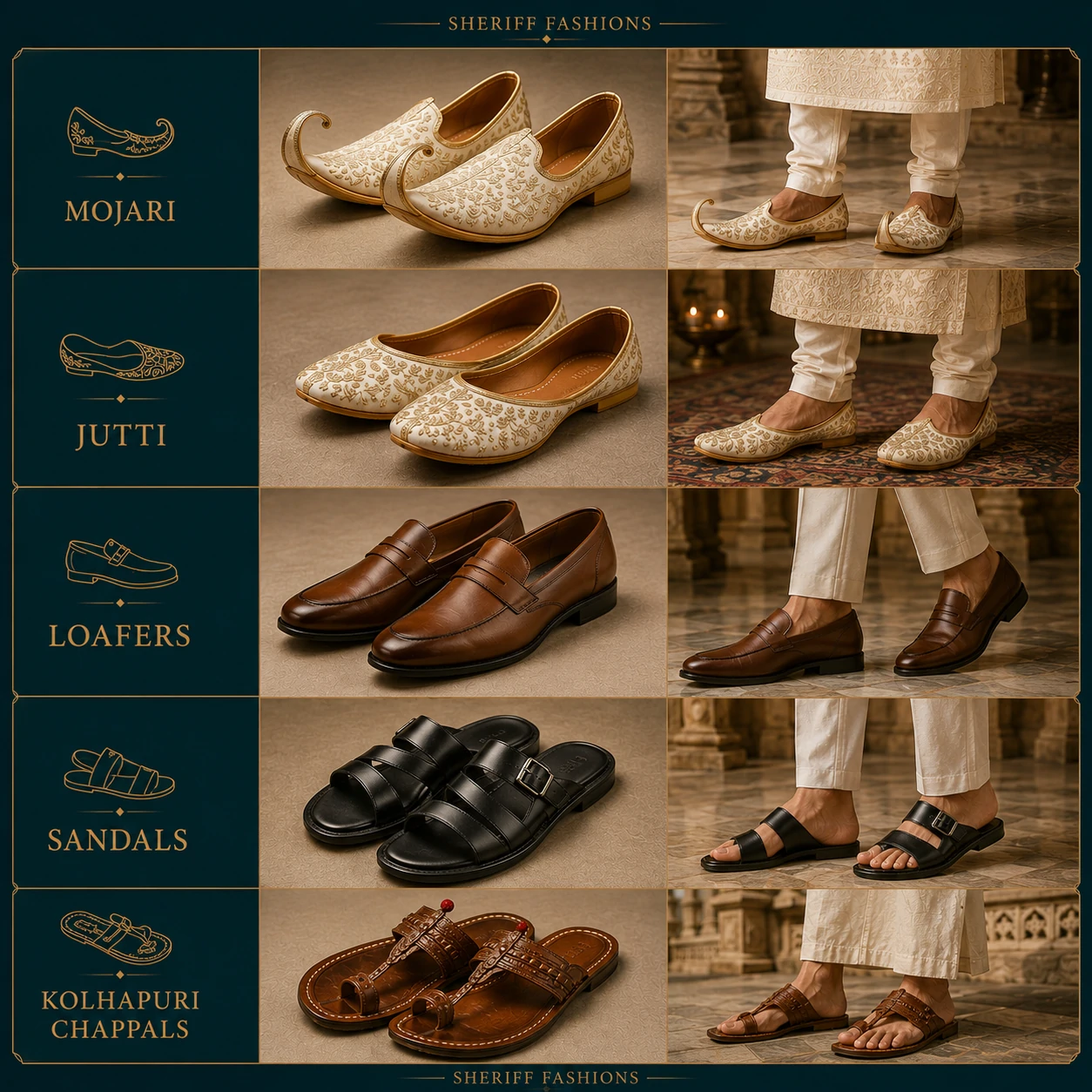
Footwear is the most overlooked — and most noticed — detail of any kurta look.
- Mojari – traditional, curled-toe, festive and wedding wear
- Jutti – embroidered, slightly more casual
- Loafers – semi-formal, fusion styling
- Sandals – Offer comfort while maintaining a relaxed ethnic appeal.
- Kolhapuri Chappals – Blend traditional craftsmanship with timeless style for an authentic look.
11. Styling Mistakes to Avoid
Even well-intentioned buyers make avoidable errors — here’s what to watch for.
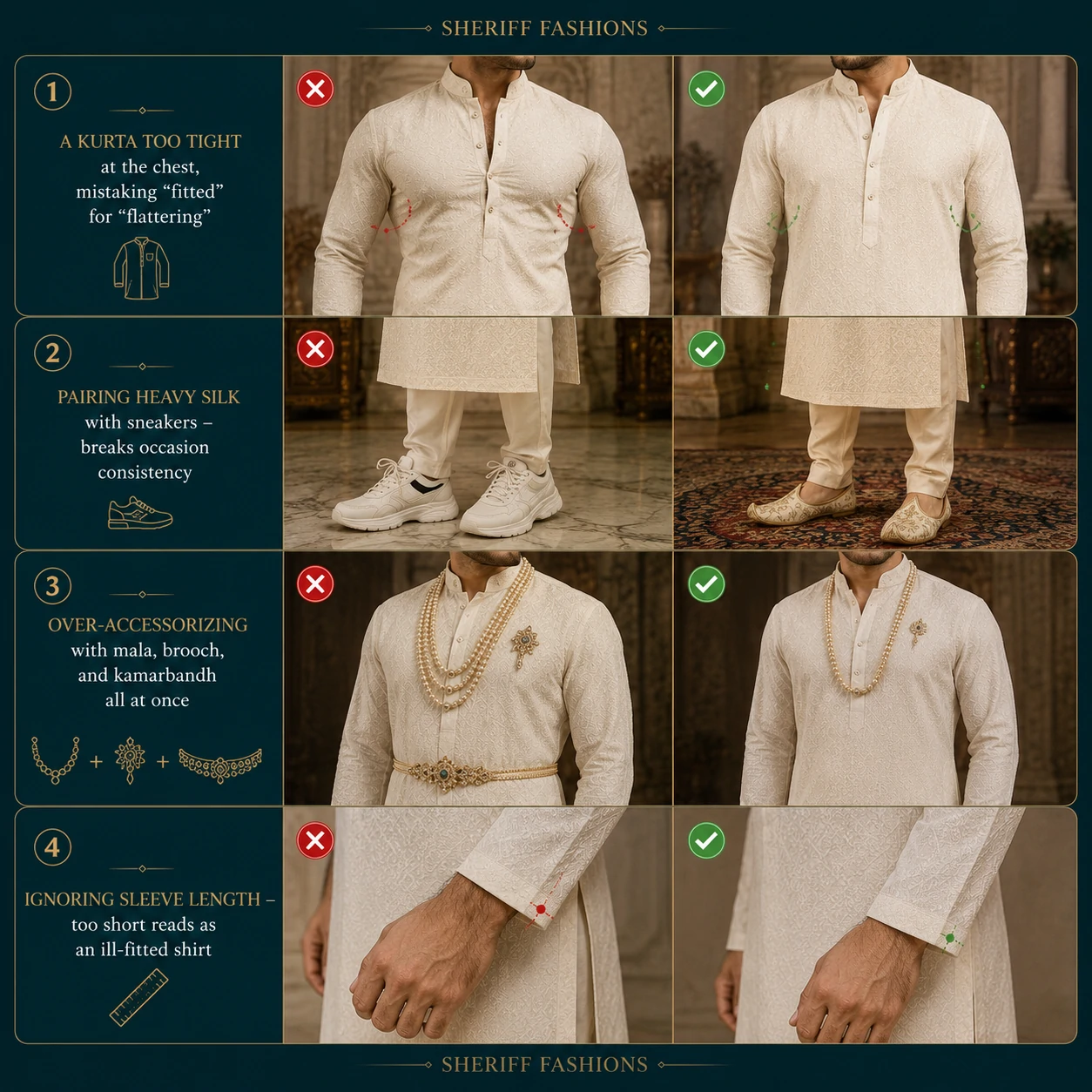
- A kurta too tight at the chest, mistaking “fitted” for “flattering”
- Pairing heavy silk with sneakers – breaks occasion consistency
- Over-accessorizing with mala, brooch, and kamarbandh all at once
- Ignoring sleeve length – too short reads as an ill-fitted shirt
12. Fabric Care Guide
Fine fabric deserves proper care to stay looking its best for years to come.
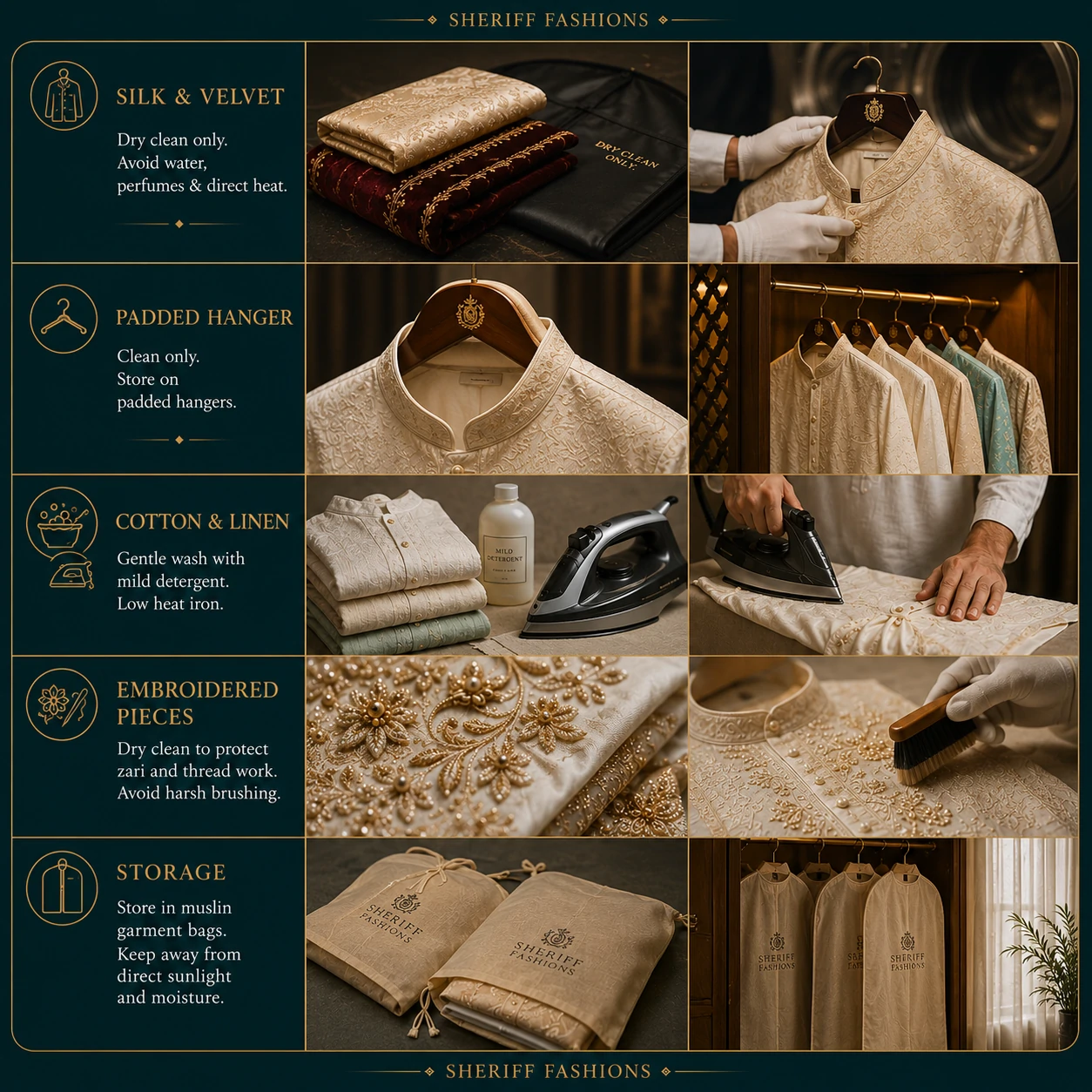
- Silk & Velvet – dry
- Clean only, Store on padded hangers
- Cotton & Linen – gentle wash, mild detergent, low heat iron
- Embroidered pieces – dry clean to protect zari and thread work
- Storage – muslin garment bags, away from direct sunlight
13. Why Choose Sheriff
Since 1978, Sheriff has dressed generations of men across Jaipur and beyond — not through mass production, but hands-on craftsmanship: fabric sourced with intent, embroidery done by hand, fit refined over decades.
- 40+ years of ethnic wear craftsmanship
- Hand-finished embroidery on every piece
- Fit refined for the Indian male body, across builds and ages
Shopping Checklist Before You Buy
- Occasion identified (wedding / festival / office / casual)
- Color matched to event and skin tone
- Footwear and accessories planned alongside the kurta
- Fabric matched to season and formality
- Correct size measured at shoulder, chest, and length
- Care instructions checked before first wear
Pro Tips for Every Kurta Buyer
Shop at least 2–3 weeks before your event
Try the kurta with the footwear you'll actually wear
Match fabric weight to the season, not just the color
Choose one statement accessory, not several
Confirm care instructions before the first wear
“A KURTA is more than clothing — it’s a reflection of your style, your story, and the traditions you carry forward. Choose wisely, wear it with pride.”
Frequently Asked Questions
What is a Kurta?
A loose, collarless or mandarin-collar upper garment traditionally worn by men across South Asia, falling anywhere from hip to knee length.
How should a Kurta Fit?
It should sit precisely at the shoulder seam, allow room at the chest without billowing, end at the wrist for sleeves, and fall between mid-thigh and knee.
What Fabric is best for a kurta?
Cotton suits daily and summer wear; silk suits weddings and evening events; linen suits warm-weather festive occasions.
Which Kurta is the best for Weddings ?
Silk or silk-blend kurtas in ivory, gold, or maroon, typically paired with a jacket and mojari.
Can Kurtas be worn casually?
Yes — cotton or linen kurtas in straight-cut styles pair well with jeans or chinos for relaxed, everyday wear.
How many Kurtas should every man own?
At minimum, one festive silk kurta, one wedding-ready jacket set, and two versatile cotton kurtas for everyday and office festive wear.
What shoes go with a Kurta?
Mojari or juttis for festive and wedding wear; loafers for fusion looks; sandals or Kolhapuris for casual cotton kurtas.